
By Allison Kozicharow; Edited by Elizabeth Fine
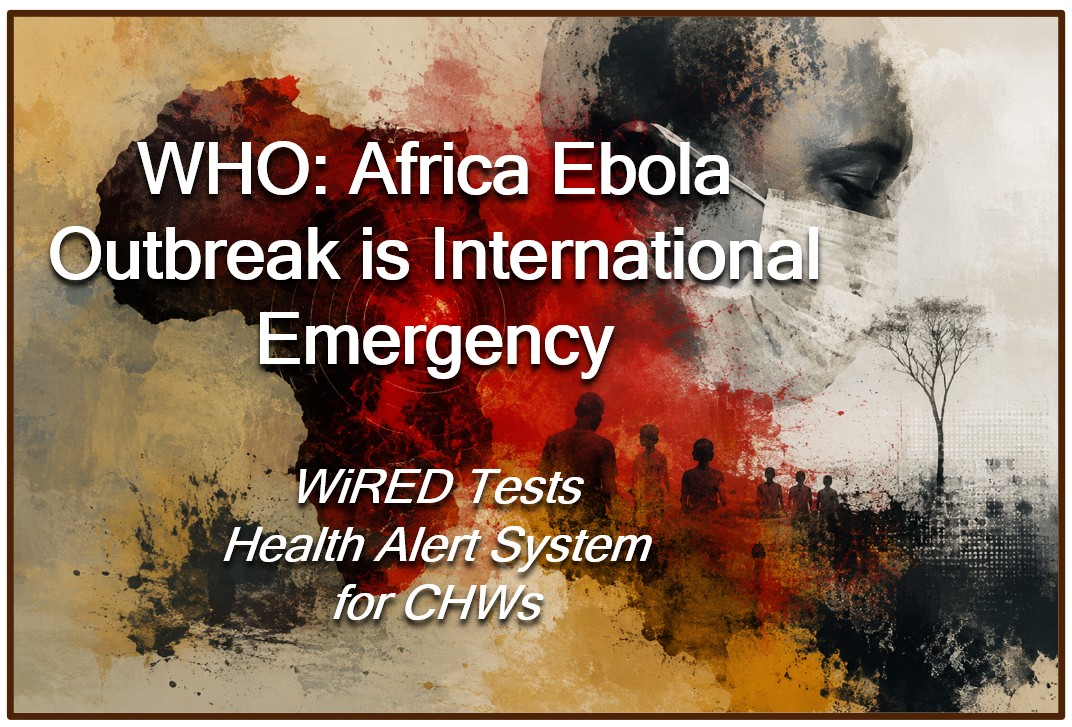
On May 16, 2026 the World Health Organization (WHO) announced that major outbreaks of Ebola disease constituted a global health emergency. Although not at pandemic level, the rapid spread of the rare Ebola Bundibugyo virus strain in the Democratic Republic of Congo (DRC) and Uganda warranted the WHO declaration. Ebola is highly contagious and often deadly — and there is no known vaccine for the Bundibugyo virus. As of today, May 19, 131 people have died from Ebola in the latest outbreak.
 Due to the closing of USAID and severe budget cuts to global health, WiRED International is amplifying our behavioral prevention messages to help communities avoid the spread of Ebola. Our trained community health workers (CHWs) are central to that effort.
For the first time, WiRED has deployed a new Level 1 Outbreak Alert System for CHWs. Through our free-to-all HealthMAP app for smart phones, WiRED took the first steps over the weekend by noting our Ebola training modules on the HealthMAP message board and posting a notice about the Ebola outbreak. This posting notes the urgency of the health issue and provides an active link that allows CHWS to download training modules immediately.
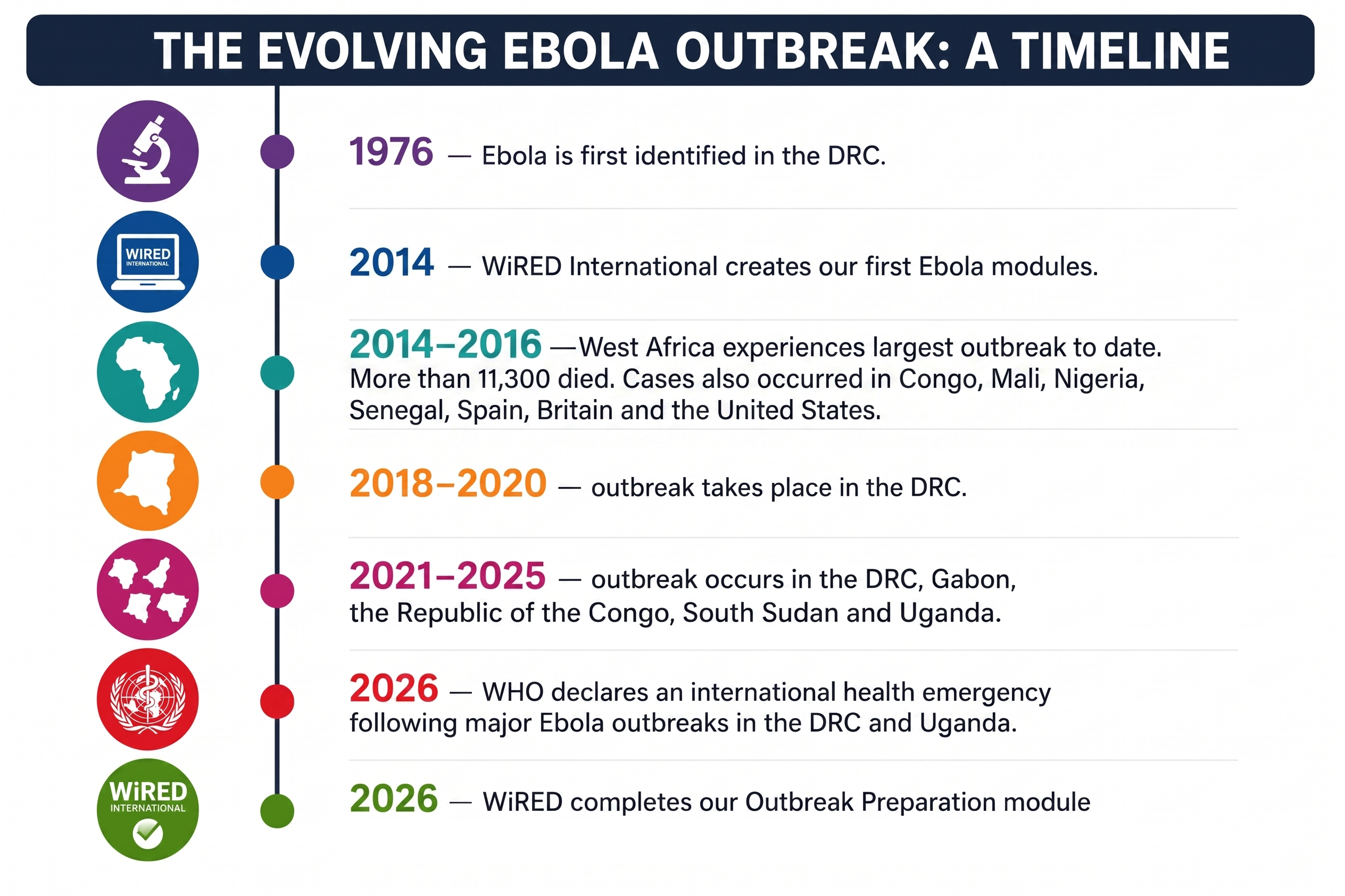 In addition to the Ebola training modules, WiRED released an Outbreak Preparation Training module. Key to stopping the spread of Ebola is prevention, and that means preparing communities, especially health workers, for outbreaks of Ebola or any other disease. This new module provides evidence-based information, suggestions and advice from leading health agencies such as WHO.
It is vital to identify and isolate Ebola victims as quickly as possible to slow the epidemic’s spread. But this process is easier said than done. In addition to the absence of global health aid, obstacles in underserved countries like the DRC and Uganda include ongoing political unrest, fragile health infrastructures, refugee crises, food insecurity and the constant presence of endemic diseases such as malaria and cholera.
 WiRED trains CHWs to alert their communities to epidemics, to educate them on diseases, to teach them prevention measures and to report suspected cases to health authorities.
WiRED International responded to the first Ebola crisis in 2014 by creating an Ebola health training module and then growing our series of Ebola modules. Today WiRED has added new tools to fortify our early efforts; we are dedicated to creating training innovations to improve the health of populations living in low-resource countries.
We will continue to post information about the Ebola epidemic as events develop.
What is Ebola Viral Disease?
Ebola disease is a severe, often fatal, viral hemorrhagic fever in humans and nonhuman primates. There are three strains: the Ebola virus, the Sudan virus and the rare Bundibugyo virus. The virus is transmitted through direct contact with the bodily fluids of an infected person, putting family members and caregivers at particular risk. However, prevention measures, when followed carefully, provide good protection against Ebola.
WiRED has created a slew of Ebola training modules found here, including the new Outbreak Preparation module.