
By Allison Kozicharow; Edited by Elizabeth Fine
Tuberculosis (TB) is preventable and curable. However, the World Health Organization (WHO) reports that “In 2025, decisions by the government of the United States of America (USG) and wider political developments have substantially changed the landscape of international donor funding, including for health in general and TB specifically.”
In response WiRED International just updated our TB module in order for community health workers (CHWs), teachers, students and anyone concerned about good health to easily access the latest science-based information about TB free of cost.
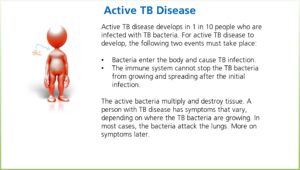 WiRED’s TB module offers an introduction to TB, its definition, resistance to drugs, latent TB infection vs. active TB disease, transmission, symptoms, diagnosis, treatment, infection control and prevention.
TB is a chronic bacterial infection called M. tuberculosis spread through the air, which usually infects the lungs, although other organs and parts of the body can be involved as well.
Almost 2 billion people globally are infected with TB, although the majority will not contract it.
 Most individuals who are infected harbor the bacteria in a dormant form without showing signs or symptoms of illness. This is commonly known as latent TB. Nevertheless, some people will develop active TB disease — and 1.23 million people died from it in 2024.
Most TB sufferers live in underserved countries where WiRED CHWs live and work. Populations in these regions are very susceptible to TB if their immune systems are weak, or if they are people living with HIV, malnutrition, diabetes or if they use tobacco.
WiRED CHWs, using our newly revised TB module, can offer vital knowledge to the communities they serve, spot early signs of TB and teach people to do so themselves, refer suspected TB cases for testing and provide support and palliative care when needed.
 According to WHO, TB “…is the world’s leading cause of death from a single infectious agent and among the top 10 causes of death.” Despite the devastating loss of U.S. global aid, communities, with the help of CHWs, can learn to protect themselves from TB and other infectious diseases.
