
One Health Training for CHWs
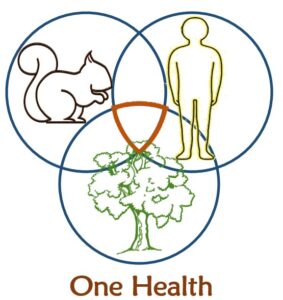
One Health recognizes that human, animal and environmental health are interconnected. Climate change, population movement, food insecurity, zoonotic disease and environmental degradation have made integrated health strategies essential in understanding and treating the problem. Underserved communities are especially affected, yet they often lack access to education that explains these risks and prepares workers on the frontline to respond.
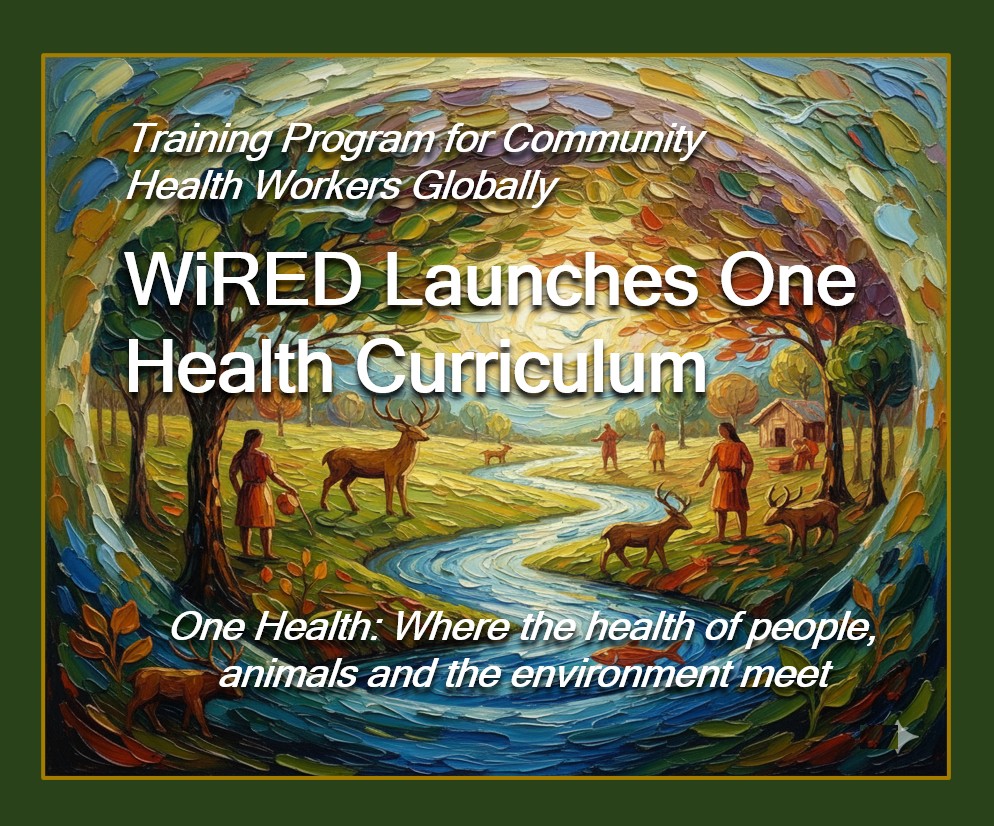
 WiRED has just launched a comprehensive training program for CHWs to address this gap. It offers an evidence-based curriculum designed for scalability, offline access and immediate relevance to communities worldwide. The program equips CHWs, often the first and only point of care in low-resource regions, with skills to identify emerging health threats across human, animal and environmental domains.
In addition to a comprehensive introduction to the One Health concept, the training program comprises four modules describing the interrelationships among the three primary elements: humans, animals and the environment. A fifth module provides CHWs with a training tool for CHWs to use in teaching community members about the One Health concept.
What is this five-part training series designed to accomplish?
- Strengthens frontline surveillance. CHWs learn to observe and report patterns involving threatening environmental conditions (water sources and sanitation) and signs of failing human health and deteriorating health of livestock and wildlife. In other words, the training sets up an early detection system.
 Builds climate-resilient communities. By understanding how heat, floods, droughts, food shortages and other environmental disruptions influence disease, CHWs help communities anticipate and address climate-related risks.
- Expands preventive capacity. The training covers zoonoses (diseases transmitted from animals to humans), vector-borne diseases, pollution risks and food/water safety. This multiplies the protective reach of basic health systems. CHWs, who interact at the grass-roots level every day, are among the first to notice threatening conditions.
- Leverages a community-based workforce. CHWs are trained to teach people about health. They do it every day. A WiRED team in Kenya reaches around 10,000 people every month with clinical services and teaching programs. CHWs are well positioned to teach and activate local participation in surveillance, sanitation, environmental stewardship and disease prevention.
- Ensures sustainability through continuous learning. WiRED’s free app (HealthMAP) not only delivers training modules instantly to phones and tablets but it provides a rigorous continuing medical education (CME) platform with ongoing, offline educational modules — creating a long-term, low-cost mechanism for skill development. Moreover, this program is without cost to all CHWs globally whether they are trained by WiRED or by others.
Why this program matters when the need is great
and global health resources are diminished.
- High scalability at low cost. Materials are digital, open to everyone and designed for offline use in regions with unstable connectivity. WiRED imposes no applications or costs; our aim to make these programs widely available across the world’s underserved locations.
- Immediate relevance to global health priorities. The program agenda directly aligns with World Health Organization (WHO), Centers for Disease Control and Prevention and United Nations One Health strategies. The curriculum and all contents are evidence-based and peer reviewed.
 Field-tested instruction methods. The module format for the curriculum has been tested and proven successful among thousands of people. The material can be studied by individuals and in group and classroom settings.
- The training is integrated into a larger WiRED network. HealthMAP is designed to provide users with a large collection of training material, including a rigorous CME program. This program satisfies WHO requirements for CHWs. The app provides evidence of each CHW’s CME completion for the records of health officials and administrators.
- Community-level impact. For potential donors, WiRED stresses that investments strengthen entire ecosystems of human, animal and environmental health rather than isolated interventions. As climate change tightens its grip, it will become essential that health considerations embrace all three in a single frame.
This One Health training program builds upon WiRED’s many health education programs designed to increase the knowledge and the capacity of CHWs in low-resource environments. Increasing the skills of CHWs has become especially important in the past year as major funders have abruptly cut support for medicines, vaccines and health infrastructures. To make matters worse, political decisions to reject valid science documenting the deteriorating climate, is now putting greater stress on fragile systems of interconnected health.
 WiRED is urging readers who see merit in our programs to help us sustain this work and make it even more widely available to the communities most in threat by the challenges to the health of humans, animals and the environment. Supporting WiRED’s One Health training program expands global capacity where it is most needed: at the community level. This investment empowers CHWs, strengthens vulnerable populations and builds resilience against growing health challenges.
