Ebola Update from Kenya
On October 6th,2026, the first patient with Ebola arrived at the Nairobi airport on a flight from the Democratic Republic of Congo. Just months earlier, WiRED International had updated its Ebola training modules for CHWs, and our team had become familiar with the revised materials. When reports emerged about the arrival of the virus, CHWs in Kisumu doubled down on studying the modules. Almost immediately, they reached out to their communities and organized widespread Ebola training programs to ease tensions about the illness and prepare people for Ebola prevention.
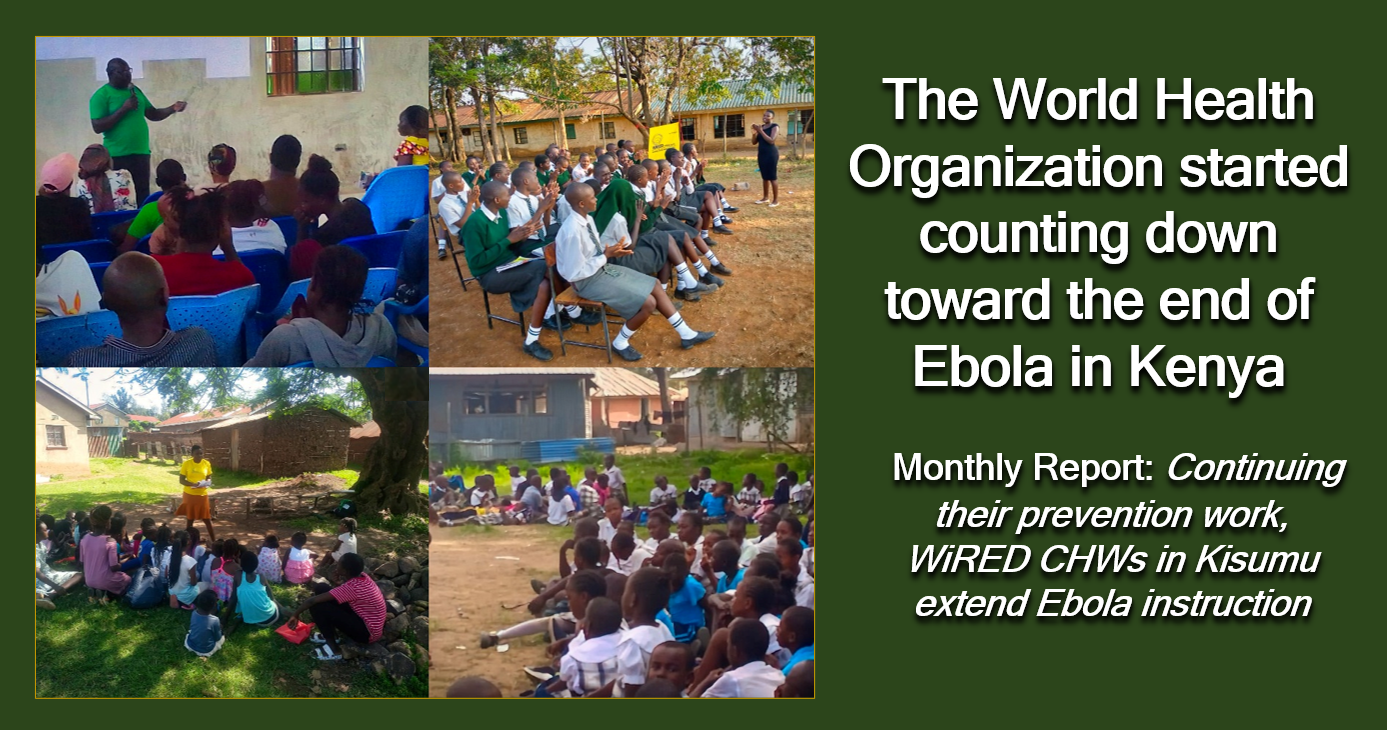
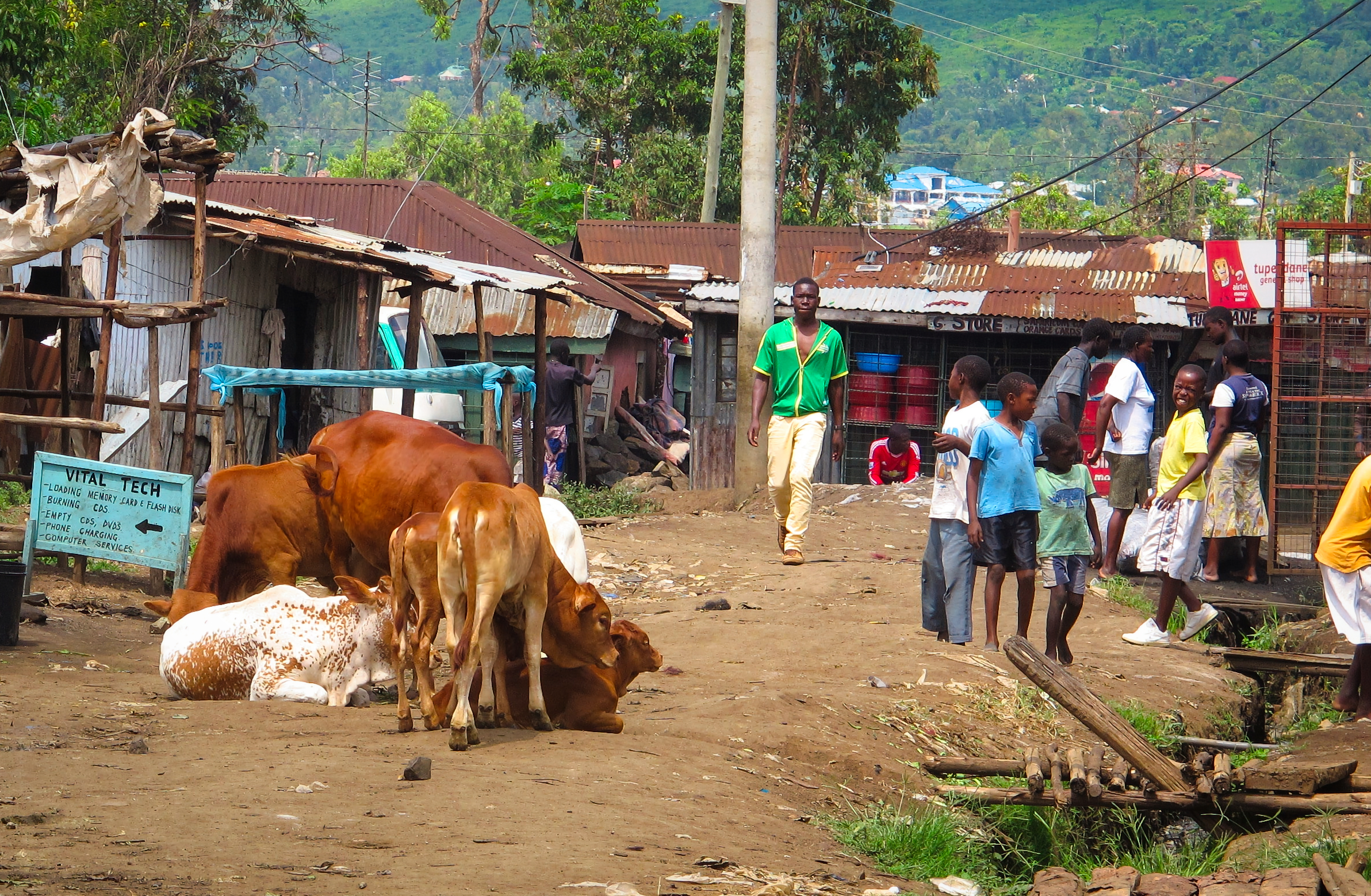 Just weeks later, the World Health Organization (WHO) announced the start of the Ebola countdown toward the end of Ebola in Kenya. Kenya discharged the last Ebola patient on November 11, and, if the country remains without an Ebola case, in 42 days it will be officially declared Ebola-free. WHO congratulated Kenya on the milestone but stressed the need to remain vigilant. It praised Kenya’s rapid and thorough response to the arrival of the virus by following correct scientific procedures to achieve this encouraging outcome.
Does that mean CHWs studied the modules and prepared the community for nothing? Of course not. Their work and the response of the community demonstrate the best of CHW training and preparation. The community is now prepared if Ebola should surface again. They know what to look for, how to respond to a suspected case and whom to involve in the Kenyan medical community to immediately confront the deadly virus.
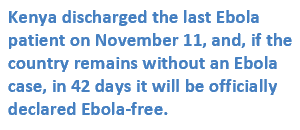 WiRED prepared the following monthly report on the activities of our CHWs in Kisumu. It was drafted before WHO made its announcement. As we noted above, most of the activity was about Ebola, but as usual for the work of CHWs everywhere, activities involved a wide array of health topics and responses. As the following story clearly demonstrates, CHWs have become a central element in community health. They are an initial point of contact about illness and health and a trusted source of information about how people can stay healthy and safe.
The October Report
 It is no surprise that Ebola is the #1 health concern that our CHWs report from their community this October. In fact, 12 out of 14 CHWs center their testimonials on the subject of Ebola. Interestingly, the number of people reached by CHW health services jumped almost 2,000 in number from August to October. CHWs report that they met with a staggering 12,283 patients!
| Month | # of CHWs | # Patients Seen | Minimum # Patients Seen per Week by Each CHW | Maximum # Patients Seen per Week by Single CHW |
| August | 19 | 10,473 | 36 | 399 |
| September | 19 | 10,987 | 39 | 602 |
| October | 20 | 12,283 | 55 | 601 |
The Kisumu community flocked to the trusted CHW team with many questions on how to prevent themselves from falling victim to Ebola. Our CHWs discovered that many people knew little to nothing about the virus. Misinformation and misconceptions about Ebola abounded, which the CHWs were eager and prepared to dispel. They met with a number of people who complained of symptoms they feared were from Ebola. But after a CHW referral to a clinic for testing, these patients were found to suffer from malaria, whose symptoms can seem similar to early Ebola symptoms.
 Ever since the Trump administration eliminated USAID and slashed other global health aid, WiRED has continued to amplify all our CHW training programs. As always, we emphasize behavioral prevention messages to help communities avoid the spread of diseases such as Ebola (for which there is no cure).
WiRED CHWs will continue to expand their reach into the community through classes in the field, one-on-one meetings, house-to house visits, referrals and follow-ups. CHWs emphasize preventive measures and rely on WiRED’s Ebola Training Series to educate residents and protect them from this deadly virus.
WiRED’s CHWs record data on their home visits, referrals and follow-ups to help others understand the direct interventions and level of care CHWs provide. The following examples for October highlight the work and value of WiRED CHWs. Note that these reports are the CHWs’ own stories from the field.
CHW Testimonials for October
 The outbreak of Ebola has really made people worried and afraid and brings back the memory of the COVID-19 pandemic. Everyone in the community has got a different understanding about Ebola; many are saying it is another wave of COVID-19 but with a different name. The signs and symptoms, especially the bleeding of all openings of the body that occur in some patients is the scariest part of Ebola. The preparations are currently taking place as the community are practicing proper handwashing and trying to be on the watch for Ebola signs and symptoms. In case of any suspected case, people are prepared to visit any facility for a checkup.
I referred two people to Kuoyo dispensary who thought they had Ebola because of their prolonged coughing. Testing resulted in a diagnosis of pneumonia. They are still under medication.
—CHW Tracy Agatha Achieng’
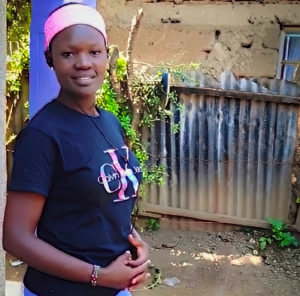 Ebola is a rare but severe infectious disease caused by the Ebola virus. Ebola can cause serious illness, death and internal and external bleeding in some cases. It does not spread through the air like flu under normal circumstances. Ebola spreads through direct contact with blood, vomit, diarrhea or other bodily fluids such as sweat and saliva from an infected person with symptoms. Ebola can also spread through contact with contaminated needles, clothing, bedding or medical equipment, handling of the body of someone who died from Ebola and contact with infected animals. During my sessions I had a client who had symptoms of Ebola such as sore throat, fever and severe headache, vomiting and diarrhea, extreme weakness and muscle pain. I referred the patient to Kuoyo health center. Though she was not diagnosed with Ebola she was treated for a bacterial infection and is responding positively.
—CHW Liz Adhiambo
 As we were working in the field, I met a group of people who were worried about Ebola. They were asking many questions. One specific question that struck me was when someone asked me if I knew under what temperature the Ebola virus cannot survive. I did not know the answer to this question. I had to go through our WIRED notes because one person was insisting that the Ebola virus cannot survive on a soda bottle inside a fridge and thus was arguing that there was no need to wash hands before taking a bottle of soda. Research shows that while the Ebola virus only survives for several days at room temperature, it can survive for several weeks at cold temperatures of 4°C (39°F).
I referred six people with coughs and mild fever to Nyawitta medical clinic. They had heard about Ebola and were joking that they might have Ebola. However, they were diagnosed with malaria and are currently under medication. I am still following up on them.
—CHW Bunnyce Atieno
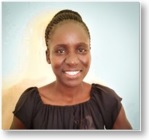 Ebola is a viral disease, very contagious and sometimes fatal, so the government of Kenya has come up with preventive measures such as preparing for quarantine facilities. So, I as a CHW have a task to create awareness in the public about Ebola. I educate the community about the common signs and symptoms of Ebola and preventive measures (e.g., washing hands regularly with soap and running water, avoid overcrowding) and to seek medical attention immediately if they develop symptoms after possible exposure. I also urge them to remain alert, informed and responsible.
—CHW Imelda Anyango
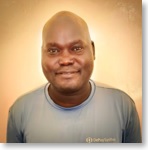 In this month of October, I conducted community awareness sessions on the Ebola virus disease following reports of confirmed cases in Kenya. I aimed at increasing community knowledge and awareness of the disease, its mode of transmission, signs and symptoms, prevention measures and the importance of early reporting of suspected cases. Through direct interaction with my community members, I also explained how the disease spreads through direct contact with the blood and other body fluids of infected persons and also contaminated materials.
Just as with COVID-19, I emphasized preventive measures such as regular hand washing with soap and clean running water, maintaining of proper hygiene. Avoiding contact with body fluids of suspected persons or confirmed cases and seeking immediate medical attention whenever symptoms associated with Ebola are observed. I encouraged the community members to avoid spreading unverified information and instead rely on official communication channels from the ministry of health.
 In my health sessions, community members present showed interest and raised concerns about the disease and its possible spread. I addressed the questions by providing them with the relevant information I had received from the WiRED Ebola modules and encouraged vigilance without creating unnecessary fear or panic. Some of the challenges I encountered included limited knowledge about Ebola among some residents, fear and anxiety arising from outbreak reports and misinformation circulating within the community. To address this as a CHW, I will continue to educate and strengthen collaboration with health facilities and with my fellow CHWs.
I referred two women who were complaining of fever and headache to the Obunga dispensary. One woman was diagnosed with malaria, was treated and put on malaria drugs. Upon doing my follow-up, I found out that she was doing well after completing her medication.
—CHW Daniel Ayieko
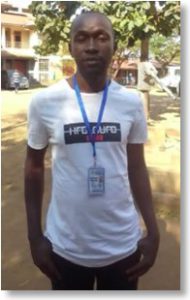 Ebola is a virus that causes bleeding and excess fever. The virus spreads through contact with blood, body fluids of a sick person and contaminated items and symptoms appear after 2 to 21 days after contact.
Kenya has officially confirmed nine cases in total including two deaths. All the cases are clustered in the capital, Nairobi. There is no current Ebola in Kisumu, but as a CHW, we are vigilant and monitoring the situation.
During this period, I realized that the community has very little information about the virus. The government has also not initiated steps to educate the communities outside Nairobi where the cases have been reported. We CHWs have worked extra hard to ensure our communities are equipped with information about Ebola. After our health sessions we urged the community members to report cases to the nearby dispensary whenever they see the signs. We also encouraged them to go for frequent medical checkups.
—CHW Zackary Omondi
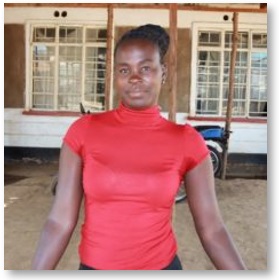 During my fieldwork in one of the areas in my community, I had a discussion/lesson with a few of my community members about Ebola. We talked about the virus, its symptoms and how it spreads. Some of its signs are fever, severe headache, sore throat, vomiting, skin rashes and unexplained bleeding from the ears, mouth and nose.
During the discussions I realized some of the members had a few of the Ebola symptoms and were afraid that they might have the disease. We also talked about how we can prevent ourselves from getting it: avoid contact with suspected cases and practice good hygiene.
After referring some of the community members who suspected they had Ebola to a clinic, they were further diagnosed and were not found with Ebola.
—CHW Mary Atieno Ogutu
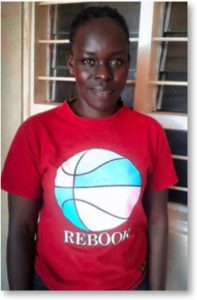 As I was doing my work as a CHW in my various villages giving health education on Ebola, I came across a certain client who had signs and symptoms of Ebola. I talked to him and counseled him on the signs and symptoms, mode of transmission and the prevention measures. Then after that I referred him to the nearest health facility, which was Airport health center.
I followed up three days later and found out that the client was diagnosed with malaria, treated and now is doing well.
In the month of October, I referred 10 clients to the service provider at Airport health center who had similar signs and symptoms of Ebola. Out the 10 clients I referred, five of them were diagnosed with malaria and treated.
—CHW Millicent Randiki
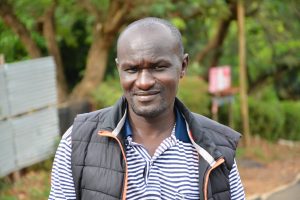 During the month I continued working closely with households to promote good health, prevent diseases and improve access to healthcare services. Despite the challenges experienced in the Obunga community, I remained committed to serving residents, identifying health problems early, providing health education and referring those in need of medical attention. Top on my list this month was Ebola education and prevention ever since Ebola patients were identified in Kenya. We must help the government in spreading prevention information in the community.
—CHW Denis Onyango
 On Tuesday when I was at my fieldwork teaching about Ebola, I met a group of young men and women. We discussed Ebola, talked about the signs and symptoms of Ebola such as fever, sweat, headache, muscle pain, sore throat, vomiting, diarrhea and unexplained bleeding from the mouth, nose and ears. I met a client who had headache, fever and loose diarrhea and referred him to the nearest health facility.
I followed up after the man was tested found out that he had malaria, not Ebola. Now he is under medication.
—CHW Mildred Digolo
 As I was going around in the community, educating residents about health issues, I came across a man who had not heard about Ebola. Ebola prevention includes handwashing, avoiding contact with fluids from the infected person and keeping distance from each other. Ebola can cause blood to ooze from openings in the body such as the eyes, mouth, nose, anus and vagina. The man was grateful and thanks WiRED for such a wonderful education.
Water is a component that is very important to our lives. Water can be clean but not safe. For water to be clean and safe, we CHWs educate the community members on the importance of water treatment and keeping it safe in the house. When water is contaminated, we get waterborne diseases such as typhoid and diarrhea. As of now, waterborne diseases have decreased because the CHWs are spreading information on sources of clean water, how to treat it and how to keep it safe for use.
Sanitation deals with toilets and their use. There’s a need for the community members to build toilets and use them properly to prevent diseases such as cholera and diarrhea.
Hygiene is also an important component that includes handwashing at five critical times: after using ash or soap, after visiting the toilet, after changing a baby’s diapers, before eating, before handling food and after touching a sick person.
—CHW Milka Aoko Nyadiang’a
 During my daily visits to Migosi and Nyawitta communities, I talked to certain families about infectious diseases that spread from person to person. We discussed harmful germs that cause infections that can spread through animal and insect bites and kissing and sexual contact. We talked about signs of illness such as fever, diarrhea and muscle and body aches.
However, some threatening infectious diseases such as Ebola require hospitalization immediately. Ebola is a dangerous virus that can cause death, but if we follow guidelines, we can lower the chances of contracting the disease and dying. We talked about how one can contract the Ebola virus by touching blood or body fluids such as saliva, poop, vomit or semen of infected persons. The virus needs an entry point to get into someone’s body for them to be infected: the virus might enter through a cut or scrape on the skin or with your hand while touching your nose, eyes or mouth. The families were very happy to know more about Ebola and felt ready to protect themselves from getting it.
During this month, I managed to refer six people at Migosi hospital for malaria check-up who were tested positive and given medications.
—CHW Lency Mmbone
 In the month of October as I was doing my daily health talk in the community, I came across a certain man who was not feeling well and had some signs and symptoms that were similar to Ebola symptoms such as headache, joint pains, sore throat and body weakness. After I had finished the health talk, I counseled the client and referred him to the nearest health facility.
After four days of follow-ups, I found out that the client was diagnosed with typhoid. He was treated and now is doing well.
In the month of October, I referred five clients to the healthcare provider for further tests and out of the five I referred two were diagnosed with typhoid but are now doing fine.
—CHW Carren Osomo
 One Monday morning I woke up early and went out to visit families in my community as usual. During the visit, I met a mother who had a young child. I asked her how the child was doing and whether the child had received all the recommended vaccinations. She told me that she had missed one clinic appointment. I explained to her the importance of immunization in protecting children against dangerous diseases and encouraged her to visit the health facility for the missed vaccination. Later, I visited the family and she had learned a lot from her clinic visit. I continued to check on her and also teach her about hygiene and other topics as well. She enjoyed the lesson and was willing to teach others, too.
—CHW Janet Awino Ochieng
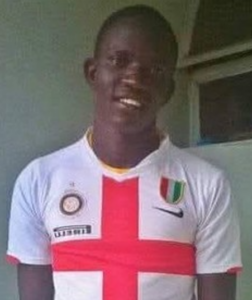 During the month, I carried out various community health activities aimed at improving the health and well-being of households in the informal settlement. My work focused on household visits, health education, disease prevention, maternal and child health, sanitation, hygiene, and linking community members to health facilities. I visited households to assess the health needs of families. I Identified six sick people and referred them to the Obunga dispensary where they were treated. I also followed up on patients who had previously been referred by me and they were doing well.
—CHW Owen Otieno