
By Allison Kozicharow; Edited by Elizabeth Fine
Introduction
This year the World Health Organization (WHO) released a report that analyzed the global burden of noncommunicable diseases (NCDs) and infectious diseases (IDs). WHO states that low-resource countries suffer the most from rising mortality rates primarily due to funding cuts, weak local healthcare infrastructures and an inadequate supply of health professionals.
WiRED International’s Role
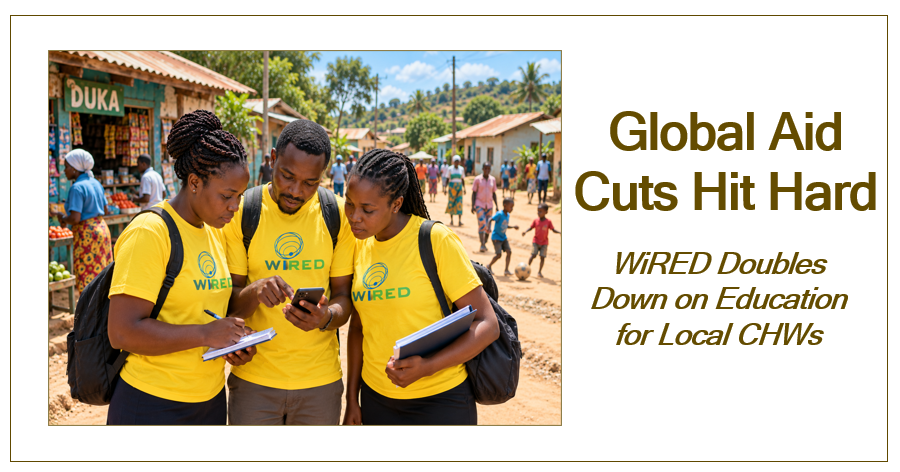
 In a quick response to last year’s global health cuts — primarily attributable to the Trump administration — WiRED expanded our community health worker (CHW) training resources, available free of charge to all and accessible through our HealthMAP phone app.
WiRED enlarged our WHO-compliant Continuing Medical Education program for CHWs. In response to a spike in child malnutrition in western Kenya, we recently completed a timely module on child nutrition in low-resource settings. To keep our health education library current and useful to CHWs who face evolving health conditions every day, we update existing modules and add new training modules to the collection on a regular basis.
 Further, WiRED continues to form partnerships with ministries of health, universities and locally formed grassroots groups seeking to improve community health. In Kisumu, Kenya WiRED’s pilot CHW team continues to provide health services to nearly 10,000 people a month.
Recognizing the importance of changing risky behaviors, WiRED’s CHWs teach a variety of health education classes designed to help community members avoid or modify risky practices. The CHWs also host health screening clinics to identify signs of IDs and NCDs and they refer community members to medical facilities for further diagnosis and treatment.
WiRED Work on Infectious Diseases
IDs are the illnesses most directly impacted by external funding cuts when medicines, vaccines and treatments become limited.
 WiRED developed a comprehensive training package for communities: How to Prepare for and Manage Infectious Disease Outbreaks. This series gives communities the information and tools ahead of an outbreak so that they be on watch and ready to respond.
In addition, WiRED created a series of ID prevention and treatment animations to engage students and families in learning about these diseases from prevention basics to home care.
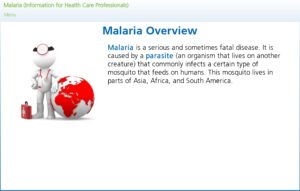
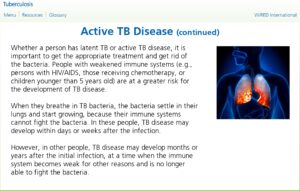
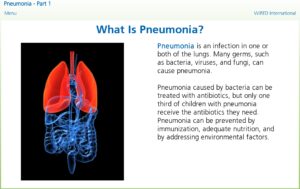
WiRED also offers modules on two top IDs cited by WHO:
 WiRED Work on Noncommunicable Diseases
NCDs are also on the rise due to severely curtailed global health aid. Withdrawal of funding support results in reductions to national health programs, cuts to disease-specific grants and decline in clinic/staffing operations. All this bears on families that are forced to deal with unaffordable costs. Under these conditions, lifestyle changes, brought about by budget pressures, often result in higher levels of NCDs.
Here are some examples of WiRED modules on NCDs, designed for CHWs to use and communities to learn from:
 Heart disease
- Lower-respiratory diseases
- Cancer Series
- Diabetes Series
Conclusion
There is no quick fix to improve the health of people living in these vulnerable areas of the world. So what approaches constitute effective interventions to advance good health?
According to WHO, “High prevalence rates of preventable risk factors continue to hold back improvements.” Prevention is WiRED’s goal across all our health education platforms as CHWs and their communities combat disease and learn healthy practices.
