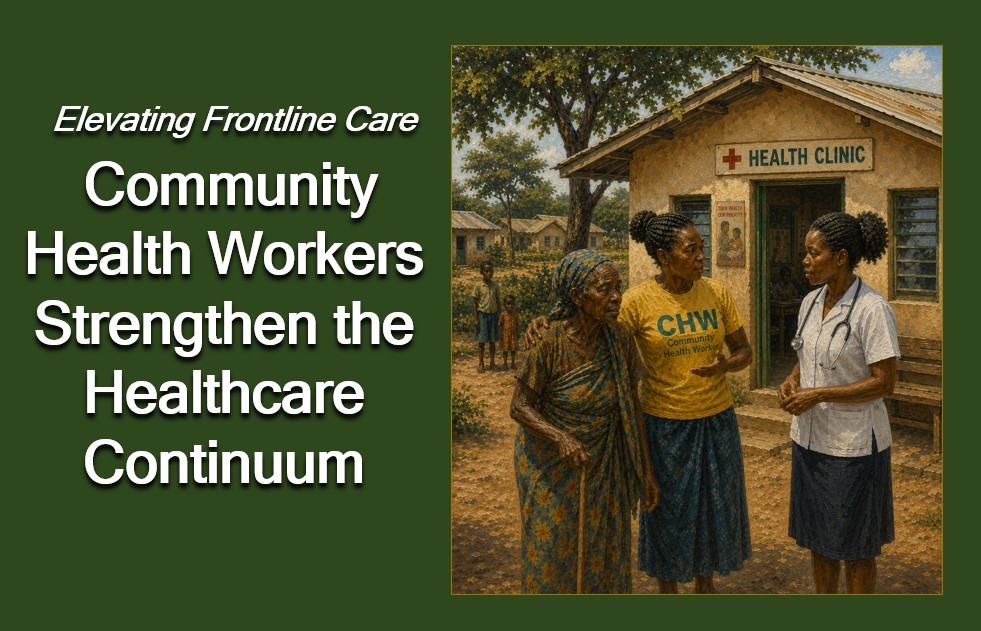

WiRED’s primary global health focus is training community health workers (CHWs), and Tom Mboya University’s forward-looking two-semester CHW certificate program begins this September. Both organizations view CHW education within the broader healthcare system. CHWs are not stand-alone providers but essential members of a coordinated healthcare team that includes community members, clinics, hospitals, laboratories and public health organizations. Together, these interconnected partners deliver prevention, diagnosis, treatment, rehabilitation and ongoing support across the continuum of care.
 Closing the Gap Between
Communities and Healthcare
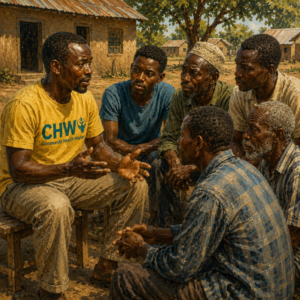
One of the greatest challenges facing healthcare today is the widening gap between underserved communities and the formal medical system. Financial hardship, shortages of healthcare professionals and inadequate health knowledge are often barriers that block people from avoiding illness and receiving timely care. As global health challenges continue to evolve, due in part to severe reductions in healthcare funding, closing this gap has become increasingly urgent.
Guiding Principles for CHW Education
The CHWs’ close ties to their communities, combined with their roles as educators, health monitors, and frontline surveillance workers, give them a unique position within the healthcare continuum. No other member of the healthcare team fulfills this combination of responsibilities. Guided by this understanding, the partnership between WiRED and Tom Mboya University is built around a central question: How can CHWs be prepared to serve as more effective health resources and stronger links between their communities and the formal healthcare system, thereby improving health outcomes in low-resource settings?
 That question shapes four primary objectives:
- Improve community health literacy. Prepare CHWs to teach community members about disease recognition, healthy daily behaviors and informed health decisions.
- Foster behavioral prevention. Build CHW skills to provide individuals, families and communities with practical individual and community-level prevention strategies that reduce the spread of infectious diseases and lower the risk of chronic illness.
- Strengthen CHW capacity. Expand the knowledge, clinical skills and leadership abilities of CHWs so that they can effectively provide health education, basic clinical services within their scope of practice and informed guidance in their communities while serving as a bridge between their communities and the healthcare system.
- Promote lifelong learning. Encourage CHWs to continue developing their knowledge and skills through ongoing medical education throughout their careers.
Why Community Health Workers Matter
As CHWs gain education and practical skills, they produce two important outcomes: healthier communities and a stronger healthcare system. How?
 Equipped with skills in patient assessment, vital signs measurement, first aid, disease prevention and health promotion, they are a remarkably effective frontline health resource. Within their communities, they promote healthy behaviors, identify health concerns early and connect patients with medical care before illnesses become severe. Across the healthcare system, they reduce the burden on clinics and hospitals by preventing disease, managing common illnesses, reducing unnecessary visits and ensuring that patients needing advanced care are referred promptly. It bears repeating that no other member of the healthcare team fulfills this combination of responsibilities. The CHW’s role is unique and fundamental to a continuous, integrated healthcare system.
Building an Integrated Healthcare System
Ultimately, Tom Mboya University and WiRED seek to elevate the role of CHWs by equipping them with the knowledge, skills and confidence needed to become trusted health leaders within their communities. Our goal is a seamless healthcare continuum in which individuals, CHWs, clinics, hospitals and public health agencies function as interconnected parts of one integrated system. To achieve this, we have developed a comprehensive educational pathway consisting of three components: Basic CHW Training, Advanced CHW Training and Special Topics Training. In addition, WiRED has developed a rigorous Continuing Medical Education (CME) program for all CHWs.
Basic Community Health Worker Training
This foundational training program provides approximately 200 hours of classroom instruction and independent study for frontline health workers serving low-resource communities. The curriculum includes 35 evidence-based modules covering anatomy and physiology, infectious diseases, maternal and child health, patient assessment, nutrition, sanitation, health education and more. Participants complete a comprehensive certification examination before returning to their communities. For many underserved populations, these graduates become the community’s primary connection to the healthcare system.
Advanced Community Health Worker Training (ACT)
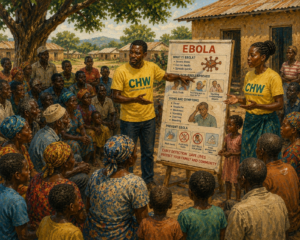
Designed for experienced CHWs, the ACT program builds on the foundational curriculum with approximately 150 additional hours of classroom instruction and independent study. The program deepens clinical knowledge and skills, while preparing CHWs for expanded leadership responsibilities. Participants learn to organize community screening clinics, identify and respond to infectious disease outbreaks, conduct school health programs, supervise health worker teams and address many of the complex health challenges common in low-resource settings. The result is a highly skilled workforce prepared to address changing community health needs.
Participants who successfully complete the coursework and pass the comprehensive final examination receive a certificate of completion, marking the next step in their professional development. Tom Mboya University will offer ACT instruction to all its students who complete the Basic curriculum during the fall semester.
Special Topics Training
After completing the Basic and Advanced programs, CHWs may pursue specialized education in one or more of 11 focused clinical areas, including diabetes, maternal and child health, HIV/AIDS, nutrition, mental health, chronic disease management and other priority health concerns. These advisor-monitored, self-directed learning programs allow CHWs to deepen their expertise in areas most relevant to their communities while remaining current with evolving healthcare practices.
Continuing Medical Education (CME)
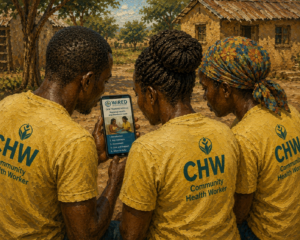
Healthcare is constantly evolving, and effective CHWs must continue learning throughout their careers. WiRED’s CME program provides regular evidence-based updates that reinforce existing knowledge while introducing new clinical guidelines, flagging emerging diseases and improving community health practices. Delivered through the HealthMAP mobile application, the program is continuously available and maintains records of educational credits. Through ongoing professional development, CHWs maintain their competence, develop new skills and continue providing high-quality care long after completing their formal training.
Conclusion
 As healthcare systems confront persistent shortages of physicians, nurses and other healthcare professionals, strengthening the capabilities of CHWs represents one of the most practical and sustainable opportunities to improve population health. By investing in a progressive educational pathway that develops knowledge, clinical skills, leadership and lifelong learning, healthcare systems can build a workforce that extends quality care far beyond the walls of clinics and hospitals.
Preparing CHWs for this expanded role requires a comprehensive educational strategy that builds progressively higher levels of knowledge and competence. The four‑part curriculum described in this article creates a workforce that continues to grow throughout a professional career. As CHWs gain proficiency, they also gain confidence, professional pride and the trust of healthcare professionals and the communities they serve. The result is a respected cadre of CHWs whose expanded skills and elevated professional standing strengthen the healthcare continuum and improve health outcomes in underserved populations.
