
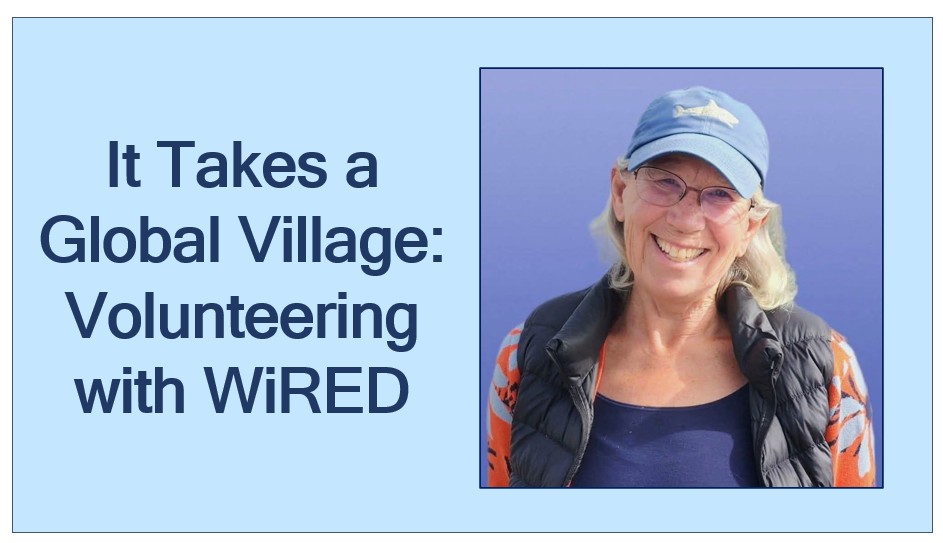

By Jan McFarland
Dr. Gary Selnow is a neighbor of mine. We have shared many conversations over the past years while he was walking his dog and I was tending my garden. We learned that we were both in the education profession. I was teaching at our local elementary school and he was a professor at San Francisco State University.
Over time I became very interested in the work that he and the WiRED International team were doing. I was impressed with the health training programs that he and his organization were providing in a global setting. At the time I was unable to help out as a volunteer, but that all changed when I retired in 2023.
 It took a while but Gary had a project that he thought was just the right fit for me.
There was a backlog of personal narratives written by a group of community health workers (CHW) in Kenya. The narratives were about the work they were doing in their local communities. These men and women were trained by WiRED’s staff to be the first responders to the medical needs of the populations they served. A CHW role is to help those in need of medical and mental health assistance. They direct people to medical facilities, and most importantly they educate their fellow community members about a wide variety of public health issues.
 My job was to help edit the personal narratives, which ran the gambit from malaria to puberty. The CHWs wrote detailed descriptions of what they encountered in the community, how they solved health problems and what they did to support people in need.
As I read through the entries, I was so impressed by the passion that all the CHWs had about the work they were doing in their communities. The knowledge they acquired through WiRED’s teaching modules really stood out. They weren’t just first responders; they were also educators teaching preventive measures for public health and safety. All of this came out loud and clear in their weekly or monthly entries.
 Editing the narratives was a thoroughly enjoyable task. I learned a lot about the dedication, concern, hope and gratitude that the CHWs expressed over and over again to WiRED for giving them the opportunity to be part of the solution in their desperately needy communities.
I’d like to share a few final thoughts: It’s evident to me from the many stories I’ve read that CHW activities are built on collaboration. From their initial training to their daily work in the field, no CHW operates in isolation. They are integral members of a team. This teamwork is apparent when they venture into their communities each morning and when they encounter challenges. They know they can rely on a team member for assistance or advice and expect a positive response. Weekly group meetings with their supervisor provide a forum to discuss issues, to review health conditions impacting their community and to learn new material that enhances the team’s professionalism. These meetings also give them a chance to share experiences and enjoy each other’s company.
 I’ve seen that this spirit of collaboration is also a defining characteristic and strength of WiRED. Even this story project is a well-designed team effort. CHWs share their stories, which are then transcribed from handwritten essays to digital forms by volunteers in the U.S. Another person edits and formats the information, and others use these stories in reports and news accounts to illustrate the invaluable contributions of CHWs. Finally, several people on WiRED’s team conduct detailed content analysis of these narratives, providing a rich account of how CHWs address the needs of low-resource communities to improve health and prevent disease. Everyone contributing to this process is a volunteer; they recognize the merit of the work in underserved communities and find value in their collaborative efforts.
In an era often marked by division and isolation, the work of CHWs and the many unseen people supporting them demonstrate the strength of collaboration. As the well-known African proverb states: “If you want to go fast, go alone; if you want to go far, go together.” It is truly an honor to be part of this team and to support the vital work of CHWs, even from thousands of miles away within view of my California garden.
